Crocodiles ( family Crocodylidae ) are one of the oldest living groups of reptiles on Earth, originating in the Eocene epoch , more than 50 million years ago. In systematic taxonomy, "crocodile" specifically refers to species in the Crocodylidae family; however, in everyday language, caimans, alligators (Alligatoridae) , and gavialidae, all semi-aquatic predators, are often collectively referred to as "crocodiles." This article focuses on " true crocodiles " (Crocodylidae), giving you a clear overview of where they live, what they look like, how they reproduce, and what they eat .
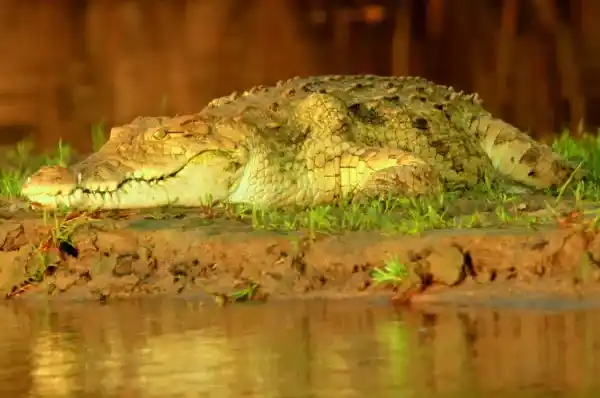
Table of contents
Where Crocodiles Live: Habitats by Species
Main characteristics of crocodiles
How do crocodiles reproduce?
What do crocodiles eat?
Where Crocodiles Live: Habitats by Species
Key environmental requirements: Crocodiles are semi-aquatic reptiles, with tropical and subtropical regions being their core distribution areas. They live in freshwater (rivers, lakes, swamps, wetlands) and brackish water environments (river deltas, mangroves, lagoons), preferring slow-moving waters, shallow banks, sheltered shorelines , and open areas where they can bask in the sun and warm themselves.
African crocodiles
Osteolaemus tetraspis
They are small in size and are mostly found in damp forests, swamps, and ditches in Central and West Africa .West African (desert) crocodile Crocodylus suchus
They are distributed in oases, freshwater depressions, and valleys along the southern edge of the Sahara-Nile River basin .Nile crocodile Crocodylus niloticus
The crocodile is the most widely distributed animal in Africa, inhabiting large and medium-sized rivers, lakes and reservoirs .African crocodile Mecistops cataphractus
With a slender snout, it prefers shady, slow-flowing river sections and marshes under forest canopies .
Asian-Australian Crocodiles
Saltwater crocodile Crocodylus porosus
The world's largest living species, it inhabits estuaries, mangroves, river deltas and coastal lagoons , and can travel to distant seas.Swamp crocodile (Indian swamp crocodile) C. palustris
They are commonly found in ponds, lakes, and shrub wetlands in the Indian subcontinent .Siamese crocodile (C. siamensis)
This species is extremely rare in the wild in Southeast Asian lowland wetlands, and is mostly found in nature reserves and release habitats .Australian freshwater crocodile C. johnsoni
Distributed in clear freshwater rivers, canyons, and pools in northern Australia.
American crocodiles
Cuban crocodile Crocodylus rhombifer
Endemic species of freshwater swamps such as the Zapata Swamp in Cuba .Moreletii (Mexican crocodile)
Rivers, limestone cenotes, and wetlands in the lowlands along the Gulf Coast.American crocodile C. acutus
From Florida to Central and South America, there is a preference for estuaries, mangroves, and brackish water bodies along the coast .Orinoco crocodile C. intermedius
Large riverbeds and seasonal floodplains in the Orinoco River Basin of Venezuela and Colombia .
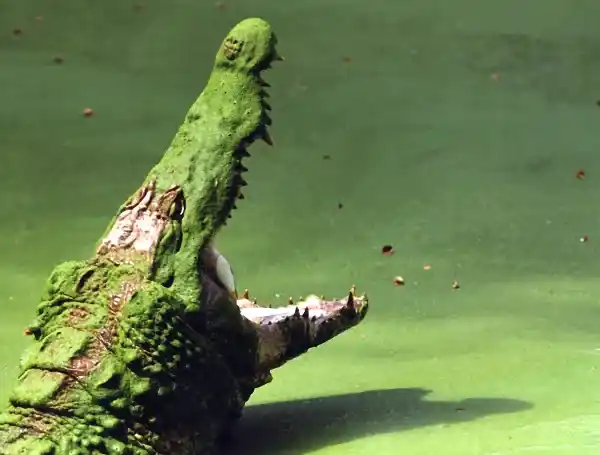
Tip: Different species have different tolerances to salinity. Saltwater crocodiles can live in seawater and brackish water for extended periods; however, most scholars believe that most crocodiles thrive best in the transition zone between freshwater and brackish water .
Main characteristics of crocodiles
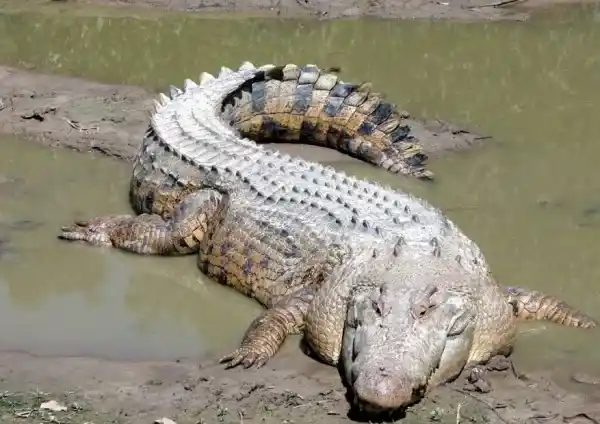
Skin and body type : Robust body with thick, dry, and hard keratinous scales , providing excellent physical protection .
Longevity : The natural lifespan is typically 50–80 years .
Exercise methods :
In water : It propels itself by swinging its strong tail from side to side , controls its direction with its limbs, and is good at traveling at night.
Land : Short but powerful limbs, often crawling with their legs close to their abdomen ; when they need to move quickly, they raise their bodies and can run at speeds of up to 18 km/h (short sprint).
Thermoregulation : As a cold-blooded (poikilothermic) animal , it commonly basks in the sun to keep warm; opening its mouth can increase evaporative heat dissipation in the oral cavity to regulate body temperature.
Ambush master : He lies motionless in the shallow waters near the shore for a long time , waiting for the right moment to launch a surprise attack.
Sensory layout : The nostrils and eyes are located on the top of the head , which makes it easy to breathe and observe even when almost completely submerged .
Jaw muscles : The jaw-closing muscles are extremely powerful and used to capture and press down prey; the jaw-opening muscles are relatively weak —which is why tape is often used to fix the upper and lower jaws to restrict the opening when handling crocodiles on-site.
How do crocodiles reproduce?
Reproduction method : Oviparous . After mating, fertilization occurs internally . The female crocodile buries the eggs in a pile of sand or fallen leaves to form a mound nest/pit nest . She incubates the eggs using the heat of humus and the sun , and guards the area nearby.
Temperature-dependent sex determination (TSD) : Nest temperature during embryo incubation directly determines sex .
At approximately 33 °C : most of the offspring will hatch as males ;
At approximately 30 °C : most of the offspring will hatch as females .
Post-hatching care : After hatching, the female crocodile will often gently carry the baby crocodile to the water with her mouth . The baby crocodile will make a high-pitched trill to call for the mother crocodile to protect it.
Note: The microclimate (shade, moisture content, and thickness of the nesting material) of different species and nest locations can create temperature gradients, which in turn affect the sex ratio .
What do crocodiles eat?
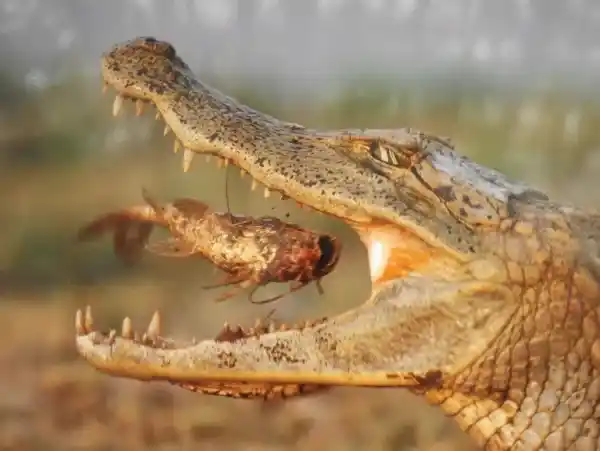
Adult crocodiles are apex ambush predators with a wide diet, including fish, amphibians, reptiles, birds, mammals , and large invertebrates. A common strategy is to ambush near the shore , bite , drag the prey into the water , and tear it apart by shaking its head or by sharing it with its companions.
It has extremely strong bite force, and literature often describes its bite pressure level as "about 1,800 kgf ".
Unable to chew , they often tear off limbs by swallowing pieces or by performing the infamous " death roll ".
Juvenile crocodiles primarily feed on insects, crabs, small fish, and amphibians , gradually shifting towards larger prey as they grow.
Dietary habits vary depending on location : different species tend to prey on local dominant prey ; for example, crocodiles in estuarine mangroves prey more on fish, crabs and wading birds , while inland lakes prey more on fish and mammals that come to drink .
References
Rodríguez, MA (2000). Crocodiles in the Neotropics (Archaeosuchia: Crocodiliana). Columbia Bioregion, Vol. 1 (2), pp. 135-140.
Escibedo, AH (2000). Effects of activity cycles and environmental variables on crocodiles (Crocodylus acutus Cuvier 1807): An assessment of visible measurement methods. Applied Ecology, Vol. 2 (1).
Christopher A. (2003). A phylogenetic approach to the history of crocodiles. Earth and Planetary Science Annals, Vol. 31, p. 360.